
Tagged: anti-capitalist
Death of a Zapatista – Neoliberalism’s Assault on Indigenous Autonomy
The Zapatista struggle continues … Subcomandante Marcos ceases to exist …Galeano lives.
– by Levi Gahman –
… from the mountains of the Mexican Southeast …
On Friday May 2, 2014 an Indigenous Zapatista teacher, Jose Luis Solís López – known by his name ‘in the struggle’ as ‘Compañero Galeano’ – was ambushed and murdered. He was beaten with rocks and clubs, hacked with a machete, shot in the leg and chest, and as he lay on the ground gasping for air – he was executed by a final bullet to the head. The reason he was subjected to this callous violence varies depending upon what account is heard or read. But in truth, he was assassinated because he was Indigenous, because he was a teacher, because he was humble, and more specifically – because he was a Zapatista. And in a contemporary global system of neoliberal production and colonial governance, people like Galeano are deemed to be threats – threats that need to be killed in cold blood and suffer brutal deaths.

Compañero Galeano
The assault on Galeano was also an attempt to antagonize the EZLN (Zapatista Army of National Liberation) into reacting with violence themselves as retribution for the death of one of their promotores de educación (‘promoters of education’ – what teachers are called in the Zapatista system of horizontal education). The provocation was directly aimed at the EZLN in hopes of prompting them into engaging in armed conflict, which would thereby give the Mexican state reason to retaliate and attack Zapatista communities. However, despite the pain and rage that the Zapatistas are feeling, they continue to release statements calling for peace. And amidst the tears, sorrow, indignation, and sadness they now have due to one of their cherished teachers being slain in broad daylight, they have stated they are not seeking revenge, nor blood, nor vengeance, but rather, they seek justice.
Freedom From Education: Decolonial Study for Abolishing the Prison-University Complex
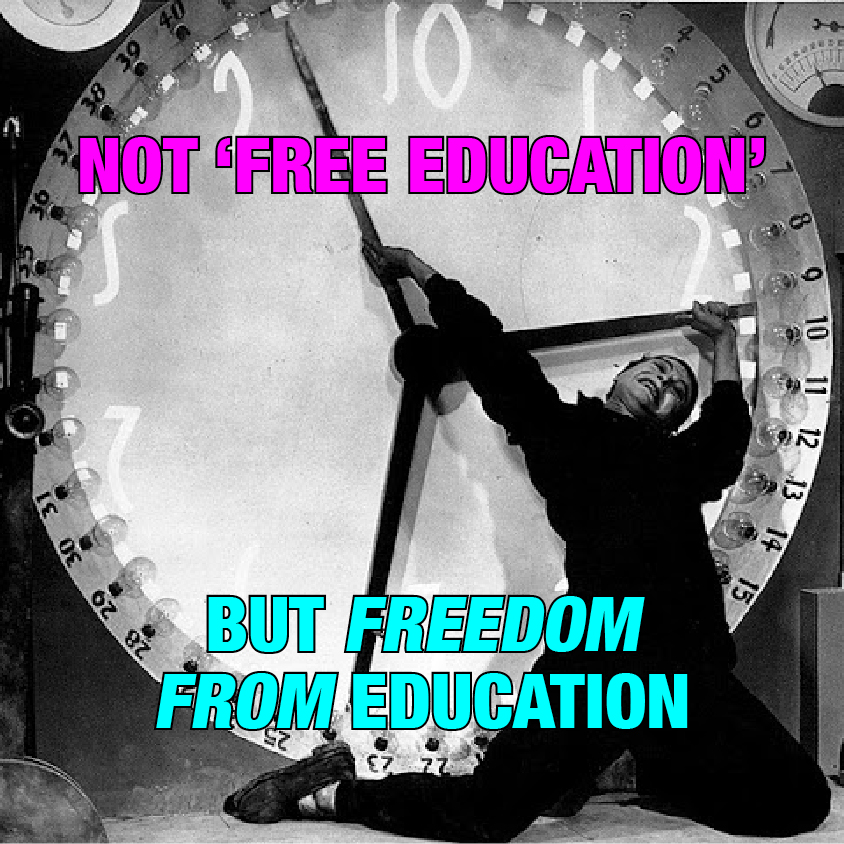
Against the romanticizing of education, Leftists should recognize alternative regimes of study, as practiced in prison organizing and indigenous peoples’ movements, and participate with them toward dismantling the intertwined regimes of education and carcerality.
– an essay by Abraham Bolish –
Left movements in North America romanticize education in many ways. Calls to “defend public education” emanate from the most radical movements of students, like the ‘Maple Spring’ in Quebec, and teachers, like the social justice-oriented Chicago Teachers Union. In struggles against prisons, with images of the ‘school-to-prison pipeline’ and calls for ‘education not incarceration,’ we on the Left often criticize contemporary education as corrupted for disproportionately funneling poor youth of color into the penal regime. Conversely, in organizing around universities, the university has been framed as losing its educational mission and becoming like a prison, an “ivory cage,” which “incarcerates” potentially resistant young people behind walls of debt.
This fetishizing of education is a key obstacle to Left movements’ revolutionary goals. Seeing ‘revolution’ as an overturning of a dominant order, a revolutionary movement would need to radically transform all of the regimes composing that order—from the family and work to transportation and prisons. Such a movement is hindered if any one of these regimes is immunized from critique. That is precisely what has happened with the regime of education.
Organizing, Teaching, Transforming: Higher Ed Struggles within/against/beyond Unions and ‘The University’

Nick Hengen Fox, a full-time faculty member at a community college, talks about the connections between successful union organizing and the classroom, radical teaching practice, and what “critical university studies” might look like outside of a university. Continue reading
Occupying the City with the Social Science Centre – an Interview with Mike Neary
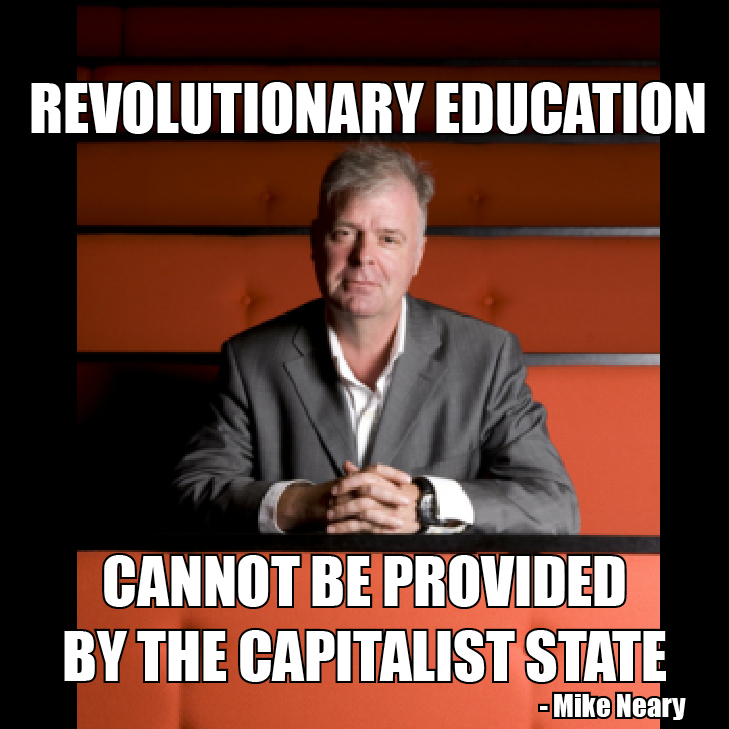
Summary: Professor Mike Neary speaks on the origins, purposes, and tensions of The Social Science Centre, Lincoln in the UK, an alternative form of higher education provision run as a formally constituted co-operative. The Social Science Centre sets itself against the usual colonial relations between universities and communities, seeking to occupy and re-invent the ‘idea of the university’ by producing critical, practical knowledge grounded in the real lives of its members. Neary raises questions about how such projects can create new, sustainable forms of social wealth against and beyond capitalism.
Against Academic Alibis: The Best Education is the Struggle – An Interview with George Ciccariello-Maher
Summary: The author of We Created Chávez, George Ciccariello-Maher, draws on his experiences in the “cauldron of resistance” of Oakland, CA to speak on the relations between education, organizing in universities, and struggles against police and prisons. Against academics’ use of alibis, such as ‘changing the world by teaching,’ to legitimize anything they do as a contribution to radical movements, he calls for academics to more clearly distinguish between their jobs and their political work.
Reanimating Histories of Struggle as Weapons against Neoliberal Individualization – An Interview with Don Kingsbury
Summary:
Reflecting on the building occupations at UC Santa Cruz in 2009-2010 and cross-pollination between student and worker struggles, Don Kingsbury highlights the need to excavate and reanimate histories of radical movements. Under the conditions of academic precarity, and against the neoliberal privatization of the general intellect, Don calls for turning communities of necessity into communities of resistance.
Occupying Our Education

Summary: Drawing on experiences with Occupy CUNY, the Adjunct Project, and teaching an ‘Occupy Class’ at Brooklyn College, Steve M. shares insights into the conditions for organizing around universities today. In the face of the challenges of divisions of race and class between students and workers, and across the segregated city, Steve highlights the potentials for bringing militant co-research into coalitions and into classrooms themselves.
Revolutionary Study against & beyond the University

Summary:
An interview with, Jennifer, a militant student-worker in Seattle on: revolutionary study groups with the Black Orchid Collective, organizing against union bureaucracy and non-profit recuperation, & creating a solidarity network across the university for worker, student, and community control.
Horizontalism within and against Academia, Unions, and Non-Profits

Summary: Drawing on organizing experiences in Seattle and the University of Washington, Ariel speaks of tensions in horizontalist movements. Within the university, she reflects on an anti-capitalist approach to service learning, organizing within and against a graduate student union, and creating a student-worker coalition. Across the university-city boundaries, she analyzes Occupy Seattle and resistance to both the non-profit- and academic-industrial complexes.
Unsettling the University: For Abolitionist, Decolonial Education Struggles

– An Interview with Matthew Evsky (Part 2) –
Summary:
In this interview, Matthew Evsky* speaks on ways that the education system is bound up with policing, mass incarceration, and settler colonialism. How can we integrate education struggles with abolitionist, decolonial approaches? For resistant alternatives, we can look to Liberation Schools and free, cooperative universities embedded in communities. Facing major barriers to these from racism, we must call on white people to renege on their racist bargain with the state and capital. How can we popularize such an abolitionist politics with narratives that convince people to be for annihilating the very system that gives them privileges?
 Class War University